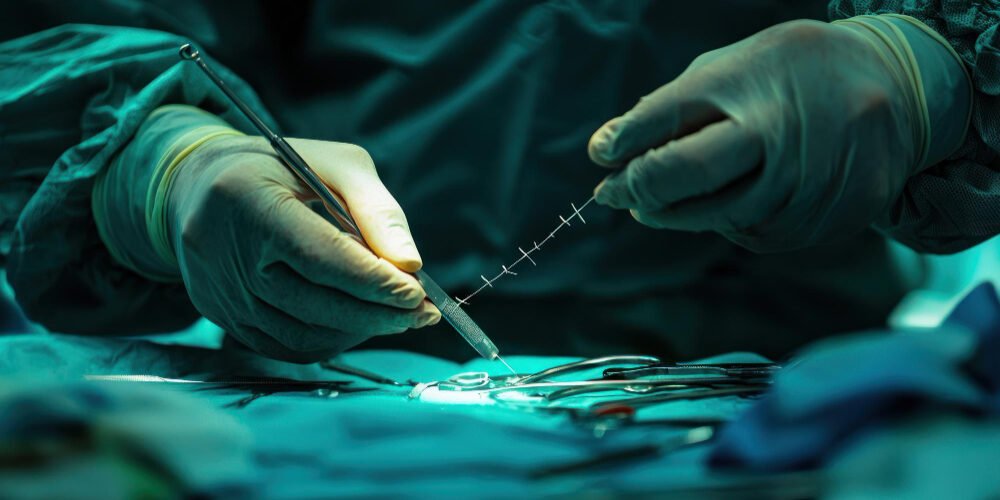
Selecting the appropriate suture material is a critical clinical decision that directly impacts wound healing, infection risk, tissue reaction, and long-term surgical outcomes. Surgeons must evaluate factors such as tissue type, healing time, tensile strength requirements, and patient condition before choosing between absorbable and non-absorbable sutures.
Understanding the differences between materials like PGA, Polyglactin, Nylon, and Polypropylene helps ensure optimal surgical performance and patient recovery.
Understanding Absorbable Sutures
Absorbable sutures are designed to break down naturally in the body through hydrolysis or enzymatic degradation. They eliminate the need for suture removal and are ideal for internal tissues that heal over a predictable timeframe.
1. Polyglycolic Acid (PGA)
PGA sutures are synthetic, braided absorbable sutures known for predictable absorption and strong initial tensile strength.
Key Benefits:
-
High initial tensile strength
-
Predictable absorption profile
-
Minimal tissue reaction
-
Excellent knot security
Clinical Applications:
-
General surgery
-
Gynecological procedures
-
Gastrointestinal anastomosis
-
Subcutaneous tissue closure
PGA typically retains strength for approximately 2–3 weeks and is fully absorbed within 60–90 days, depending on the surgical environment.
2. Polyglactin 910
Polyglactin 910 is another synthetic braided absorbable suture with excellent handling properties and controlled degradation.
Key Benefits:
-
Smooth tissue passage
-
Reliable knot strength
-
Controlled absorption
-
Reduced inflammatory response
Clinical Applications:
-
Soft tissue approximation
-
Obstetric procedures
-
Pediatric surgery
-
Oral and dental surgeries
Polyglactin sutures are widely preferred when surgeons need reliable wound support during early healing phases.
Understanding Non-Absorbable Sutures
Non-absorbable sutures are not degraded by the body and provide long-term tensile strength. They are used in tissues that require prolonged support or where permanent reinforcement is needed.
3. Nylon Sutures
Nylon is a synthetic monofilament or braided non-absorbable suture known for minimal tissue reactivity.
Key Benefits:
-
High tensile strength
-
Low tissue reaction
-
Smooth passage through tissue
-
Suitable for skin closure
Clinical Applications:
-
Skin closure
-
Plastic surgery
-
Orthopedic procedures
-
Cardiovascular surgeries
Nylon is often selected for external skin suturing where removal is planned after healing.
4. Polypropylene Sutures
Polypropylene is a synthetic monofilament non-absorbable suture recognized for exceptional durability and biocompatibility.
Key Benefits:
-
Excellent long-term tensile strength
-
Minimal tissue adherence
-
High resistance to infection
-
Superior elasticity and flexibility
Clinical Applications:
-
Cardiovascular surgery
-
Hernia repair
-
Vascular anastomosis
-
Orthopedic surgery
Polypropylene is particularly valuable in procedures requiring permanent wound support or prosthetic fixation.
Key Differences: Absorbable vs Non-Absorbable Sutures
| Parameter | Absorbable Sutures (PGA, Polyglactin) | Non-Absorbable Sutures (Nylon, Polypropylene) |
|---|---|---|
| Degradation | Absorbed by body over time | Remain permanently unless removed |
| Tissue Support Duration | Short to medium term | Long-term or permanent |
| Need for Removal | No | Yes (if used externally) |
| Typical Use | Internal soft tissues | Skin, vascular, orthopedic, hernia |
Factors Surgeons Should Consider
When choosing between absorbable and non-absorbable sutures, surgeons typically evaluate:
-
Tissue healing rate
-
Infection risk
-
Required tensile strength duration
-
Cosmetic outcome needs
-
Patient-specific factors (age, comorbidities)
For rapidly healing tissues, absorbable sutures like PGA or Polyglactin are generally preferred. For tissues requiring prolonged mechanical support, Nylon or Polypropylene may be more suitable.
Making the Right Choice for Surgical Success
There is no universal “best” suture material. The optimal choice depends on the clinical scenario, surgical technique, and healing expectations. Understanding the material science behind PGA, Polyglactin, Nylon, and Polypropylene allows surgeons to tailor wound closure strategies for better patient outcomes.
Manufacturers that offer a comprehensive range of both absorbable and non-absorbable sutures enable healthcare providers to select the right solution for every surgical need.